Clay vs Cast Iron vs PVC Sewer Pipe: How Long Each One Lasts
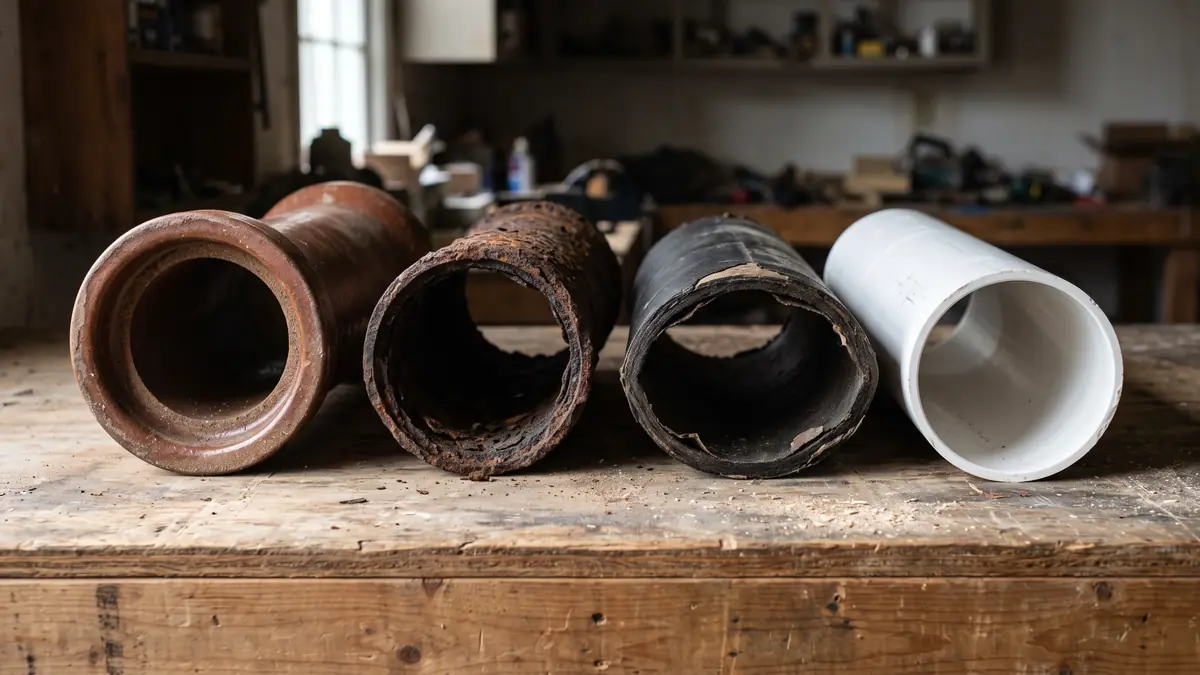
Table of contents
Two homes on the same street can have very different sewer lines, and the pipe material is the biggest reason why. Knowing your sewer pipe material helps you guess how much life the line has left and which repair will work. Here is how clay, cast iron, Orangeburg, ABS, PVC and HDPE compare.
Clay, cast iron and PVC age differently. Knowing which one you have helps you judge whether to repair or replace.
Why Sewer Pipe Material Matters
Each material fails in its own way. Clay lets roots in at the joints, cast iron rusts from the inside, and Orangeburg flattens.
The material also decides which repairs are possible. A pipe that still holds its shape can often be lined, while a pipe that has collapsed needs to be replaced.
Sewer Pipe Materials Compared
| Material | Common in homes built | Typical lifespan | Most common problem |
|---|---|---|---|
| Clay (vitrified clay) | Before the 1970s | 50 to 60+ years | Roots entering at the joints |
| Cast iron | Before the 1970s | 50 to 75 years | Rust and scale narrowing the pipe |
| Orangeburg (fiber) | Late 1940s to 1960s | About 50 years | Flattening and collapse |
| ABS plastic | 1970s onward | 50+ years | Joint separation, sags |
| PVC | 1970s onward | Decades when installed well | Damage from settling or crushing |
| HDPE | Modern replacements | Decades when installed well | Few; joints are fused |
These are general ranges. Soil, tree roots, water chemistry and how well the pipe was laid can shorten or stretch them.
Clay Sewer Pipe
Clay pipe is strong and does not rust, so the pipe itself can last a long time. Its weak point is the joints, which were short sections fitted together with mortar or simple seals.
Over the years, soil movement opens small gaps at those joints, and fine roots find them. Once inside, the roots grow into a mat that catches waste and blocks the line.
Cast Iron Sewer Pipe
Cast iron is heavy and tough, and it was often used under the house and for the first few feet of the line. Over time, it rusts and builds up scale on the inside, which narrows the pipe and makes it rough.
Rough walls catch grease and paper, so clogs come back more often. In late stages, the bottom of the pipe can rot through and leak into the soil.
Orangeburg Pipe
Orangeburg is pressed wood fiber soaked in tar, used widely after World War II. It is the shortest-lived sewer pipe in most older neighborhoods.
It slowly squeezes into an oval, blisters inside and eventually collapses. Read our full guide to Orangeburg pipe to learn how to spot it.
ABS and PVC Plastic Pipe
ABS (black plastic) and PVC (white plastic) became common from the 1970s. Both have smooth walls and glued joints that resist roots far better than clay.
Their problems usually come from installation, not age. Joints can pull apart if the soil settles, and a section can sag and hold waste if it was not laid on firm ground.
HDPE Pipe
HDPE is a flexible plastic pipe used in most trenchless replacements today. Its sections are heat-fused into one continuous pipe, so there are no joints for roots to enter.
It is also the pipe pulled into place during pipe bursting, which is why many older lines are now being replaced with it.
How to Find Out What Pipe You Have
Your home's age is a good first clue, but many lines have been partly repaired over the years. A camera inspection shows the actual material, section by section, in a few minutes.
Once you know the material and its condition, the choice gets simple. A sound pipe with root problems is often a good fit for pipe relining, while a flattened or collapsed one needs replacement.
Plan Ahead, Not After a Backup
If your sewer pipe material is clay, cast iron or Orangeburg and the line is 50 years old or more, it is worth a look before it fails. A planned repair is cheaper and far less stressful than an emergency.
Call (562) 603-5090 to ask about a camera inspection.
Have a Question About Your Sewer Line?
Call any time to be connected with a local service provider and ask about a camera inspection and its cost. Or send a message and ask about your situation.
Related Guides

What Is a Bellied Sewer Line? Signs, Causes and Repair Options
A bellied sewer line has a sag that holds water and waste. Learn the warning signs, why bellies form and the repair options to ask a service provider about.
Read more →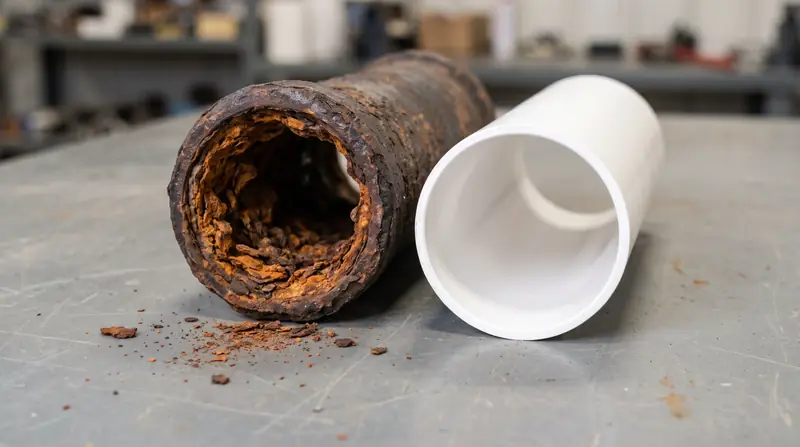
Cast Iron Sewer Pipe Problems in Older Homes
Cast iron sewer pipes can corrode, crack and clog with age. Learn the warning signs, why older homes are affected and what repair options exist.
Read more →
Sewer Line Problems in 1960s Homes in California
Homes built in the 1960s often have clay, cast iron or fiber sewer pipes now past 60 years old. Learn the common problems and how to check your line.
Read more →