Spot Repair vs Full Sewer Line Replacement: How to Decide
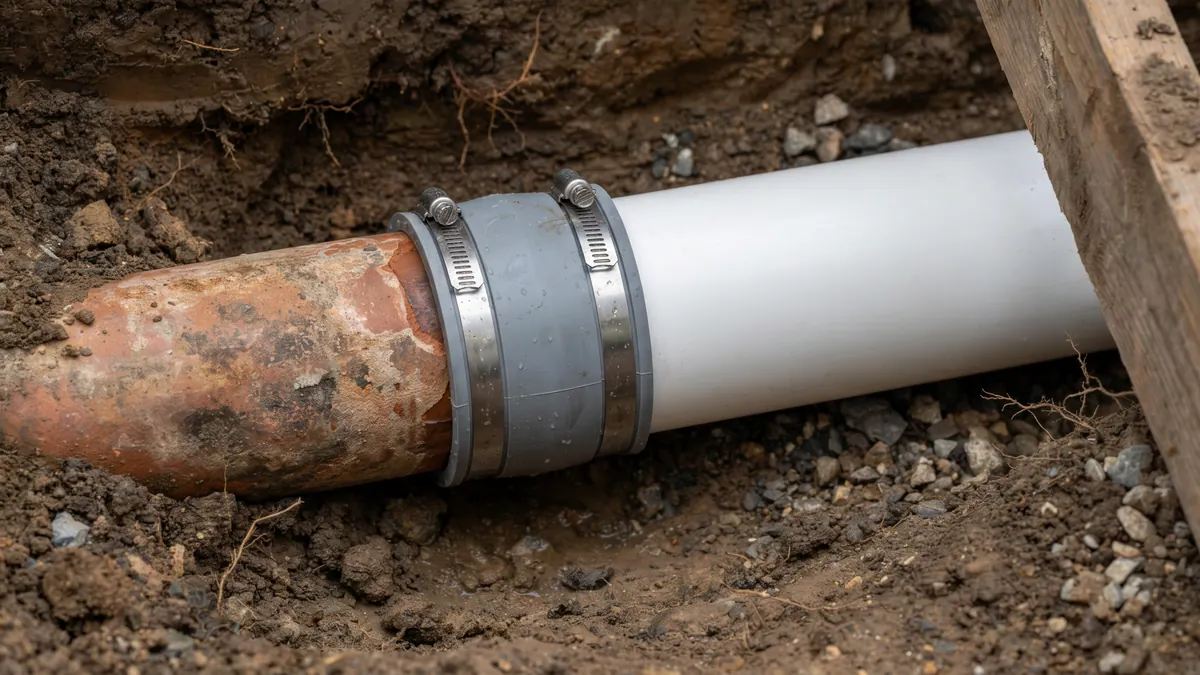
Table of contents
- What a Spot Repair Is
- What Full Replacement Covers
- When a Spot Repair Makes Sense
- When It Does Not
- What the Camera Needs to Show
- A Simple Decision Checklist
- Example Scenarios
- Questions Homeowners Ask
- Can a spot repair last as long as a new line?
- Will I need another repair later?
- Is a partial repair always the lower-effort option?
- Sources and Further Reading
- Next Step
A spot repair vs full sewer line replacement decision comes down to one question: is the damage limited to one place, or is the whole pipe wearing out? Fixing one section is less work than replacing a line, but it only makes sense if the rest of the pipe is in good shape. This guide explains how each option works, the signs that point to one or the other and what the camera footage needs to show.
What a Spot Repair Is
A spot repair, also called a point repair, fixes a single damaged section without replacing the whole line. In an open repair, the crew exposes the pipe, cuts out the damaged part and joins in new pipe with couplings. In a trenchless version, a short liner patch is installed inside the pipe over the defect. The NSF certification listing for a point repair system shows one example of the second approach, which builds on the same practice used for full lining.
What Full Replacement Covers
Replacement installs new pipe along the entire damaged run, from the cleanout or the house to the connection at the public sewer. It can be done in a trench or with a no-dig method like pipe bursting. Our sewer line replacement page describes the process, and our guide on what affects the cost of replacement explains what goes into a quote.
When a Spot Repair Makes Sense
This kind of repair is a good candidate when:
- The camera shows one clear defect, such as a single crack, a broken section or one failed joint.
- The rest of the pipe is sound, with no widespread cracking, offsets or corrosion.
- The cause is local, for example a tree root entry at one joint or damage from a past excavation.
- Access to the spot is practical, or a trenchless patch can reach it.
When It Does Not
It is usually the wrong choice when:
- There are repeated failures along the line. Fixing one place often just moves the next failure to a weaker spot.
- The material is near the end of its life. Old Orangeburg pipe and badly corroded cast iron often fail in many places, so a patch may not last.
- There are many joint defects. If numerous joints are offset or leaking, repairing one does not solve the rest.
- The line has a long belly. A sag that holds waste needs the pipe regrading, not a patch. See bellied sewer lines.
A spot repair fits one defect in a sound pipe. A pattern of defects points to replacement or a longer-run repair.
One defect in a sound pipe is a spot repair. A pattern of defects is a different question.
What the Camera Needs to Show
The decision depends on the footage of the entire line, not just the problem area. Ask to see:
- The whole run, from the cleanout to the connection, with no skipped sections.
- The defect up close, with the distance from the cleanout noted.
- The condition of the rest of the pipe, including joints, material and any sags.
- A second look after cleaning, if buildup hid part of the pipe.
Our guide to reading a sewer camera inspection report explains how to interpret distances and defect terms, and the NASSCO pipe rehabilitation matrix shows how providers compare repair and replacement technologies for different conditions.
A Simple Decision Checklist
- Is there one defect, or several along the run?
- Is the pipe material one that holds up well, or one that tends to fail in many places?
- Does the camera show a sag, an offset or a collapse?
- Is the spot reachable without major disruption?
- Does the provider explain why one option fits and the other does not?
If most answers point to a single, local, reachable defect, a partial repair deserves a serious look. If they point to a pattern, ask about replacement or a longer repair.
Example Scenarios
These are illustrations only.
One cracked joint near the cleanout. The camera shows a round, sound pipe with a single cracked joint and nothing else wrong. A patch or a short section replacement addresses the defect directly.
An older fiber pipe that is oval in several places. The footage shows flattening at multiple locations along the run. Patching one spot leaves the others, so replacement is usually the more sensible discussion.
Roots at three joints in a clay line. Cleaning plus a liner can seal all three joints at once, or three separate repairs may be needed. The better choice depends on access, the condition of the pipe between the joints and what the footage shows after cleaning.
Questions Homeowners Ask
Can a spot repair last as long as a new line?
A properly done repair in a sound pipe can serve for many years, but it only addresses that spot. The rest of the pipe still ages. Ask the provider what the footage says about the remaining pipe.
Will I need another repair later?
It is possible if other weak points exist. A full-run camera inspection after the repair helps confirm that the line is in good condition overall.
Is a partial repair always the lower-effort option?
It is often less work, but not always. A deep or hard-to-reach defect may need a large excavation, which narrows the gap with replacement. Compare scopes before deciding.
Sources and Further Reading
Next Step
If a camera inspection found one trouble spot and you are weighing your options, call now to speak to a specialist at (562) 603-5090, available 24/7, and ask whether the footage supports a spot repair.
Have a Question About Your Sewer Line?
Call any time to be connected with a local service provider and ask about a camera inspection and its cost. Or send a message and ask about your situation.
Related Guides
Orangeburg Pipe: How to Tell If Your Home Has It
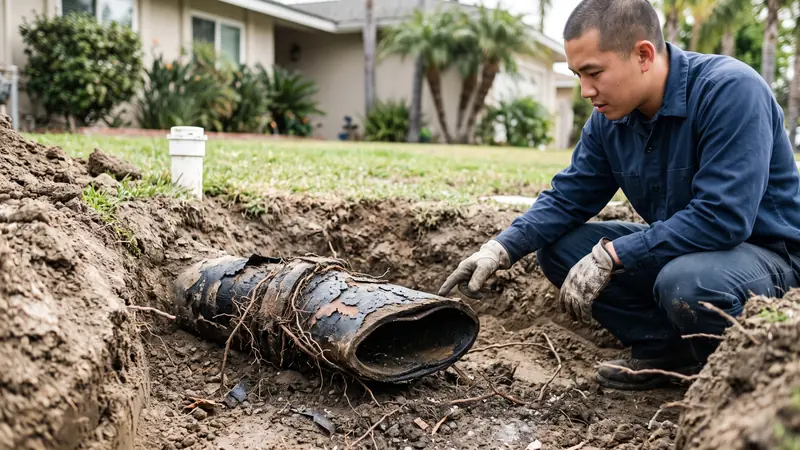
Orangeburg pipe was used in many post-war homes, and it is now flattening and failing. Here is how to spot it and what to do next.
Read more →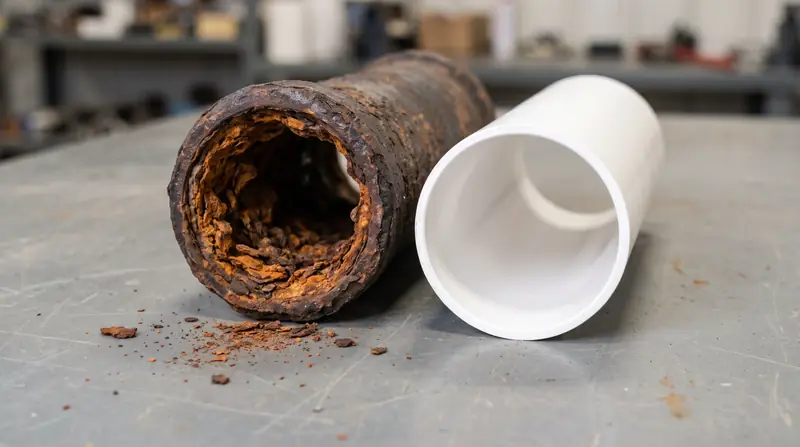
Cast Iron Sewer Pipe Problems in Older Homes
Cast iron sewer pipes can corrode, crack and clog with age. Learn the warning signs, why older homes are affected and what repair options exist.
Read more →
Trenchless vs Traditional Sewer Repair: Which Is Right for Your Home?
Digging a trench or working through small pits? Compare cost, time, yard damage and when each method makes sense.
Read more →