Are Flushable Wipes Safe for Your Sewer Line?
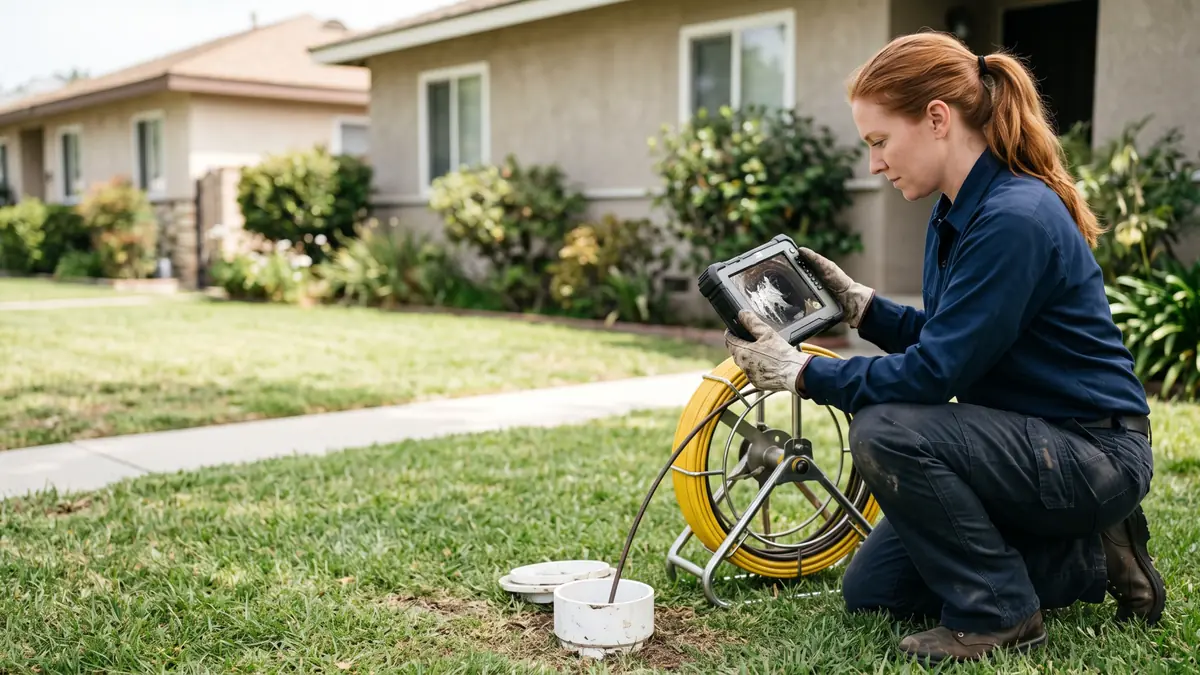
Table of contents
The package says flushable, so it seems safe to toss wipes in the toilet. But are flushable wipes safe for your sewer line? In most homes, the answer is no, and wipes are one of the most common things technicians pull out of clogged lines.
“Flushable” on the package does not mean safe for your pipes. Wipes do not break down like toilet paper, so flush only toilet paper and human waste.
Why "Flushable" Does Not Mean It Breaks Down
"Flushable" only means a wipe can pass through the toilet and out of sight. It does not mean the wipe falls apart in water the way toilet paper does.
Toilet paper is made to break into small fibers within seconds. Most wipes are made with stronger fibers so they do not tear during use, and those same fibers keep them in one piece inside your pipes.
How Wipes Clog a Sewer Line
A wipe that stays whole travels down the line until something catches it. In an older sewer line, there is a lot to catch on.
- Root hairs growing through clay pipe joints snag wipes like a net.
- Rough walls inside old cast iron pipe grab fabric as it passes.
- Offset joints and sags create edges and low spots where wipes pile up.
- Grease from the kitchen coats the wipes and glues them together.
One wipe rarely causes a backup by itself. The trouble starts when dozens build up over weeks, until water can no longer get past.
Warning Signs of a Wipe Clog
Wipe clogs usually build slowly, so watch for these early signs:
- Slow toilets. Toilets need a second flush more often.
- Gurgling. Drains gurgle when the washer or tub empties.
- Lowest drain backs up. Water rises in a shower or floor drain.
- Repeat clogs. The line clogs again soon after it was cleared.
If more than one drain is slow at the same time, the clog is likely in the main sewer line, not a single toilet.
What California Says About Wipes
California now requires many wipes that should not be flushed to carry a clear "Do Not Flush" label on the package. The law was passed to cut down on clogs in home lines and city sewers.
Even so, some wipes are still sold as flushable. The safest habit is to treat every wipe as trash, whatever the label says.
What Is Safe to Flush
A simple rule works for most homes: only flush human waste and toilet paper. Everything else belongs in the trash.
Safe to flush
- Human waste
- Toilet paper
Put in the trash
- All wipes, even "flushable" ones
- Paper towels and tissues
- Cotton swabs and cotton balls
- Dental floss
- Feminine products
Already Have a Wipe Clog?
A cable machine can open a simple clog, but it often leaves fabric and grease stuck to the pipe walls. Hydro jetting scours the full pipe so the line stays clear longer.
If clogs keep coming back, a sewer camera inspection shows whether roots or a damaged joint are catching the wipes. Fixing that spot is what stops the cycle.
The Bottom Line
So, are flushable wipes safe for your sewer line? Not really, especially in an older home with clay or cast iron pipe. Keeping wipes in the trash is the easiest way to avoid a backup.
If sewage is already backing up, stop using water and call (562) 603-5090, day or night, for emergency sewer repair.
Have a Question About Your Sewer Line?
Call any time to be connected with a local service provider and ask about a camera inspection and its cost. Or send a message and ask about your situation.
Related Guides
How Often Should a Main Sewer Line Be Jetted or Cleaned?
There is no one-size schedule for cleaning a main sewer line. Learn what affects how often it needs attention and when a camera check makes sense.
Read more →
Cooking Grease and Sewer Clogs: How to Prevent Them
Cooking grease cools and hardens inside sewer pipes, causing clogs and backups. Learn how to dispose of grease properly and protect your sewer line.
Read more →
Sewer Line Maintenance Checklist for Older Homes
Simple monthly, yearly and every-few-years steps that keep an older sewer line flowing and catch problems before they become backups.
Read more →