Yard and Landscape Restoration After Sewer Line Work
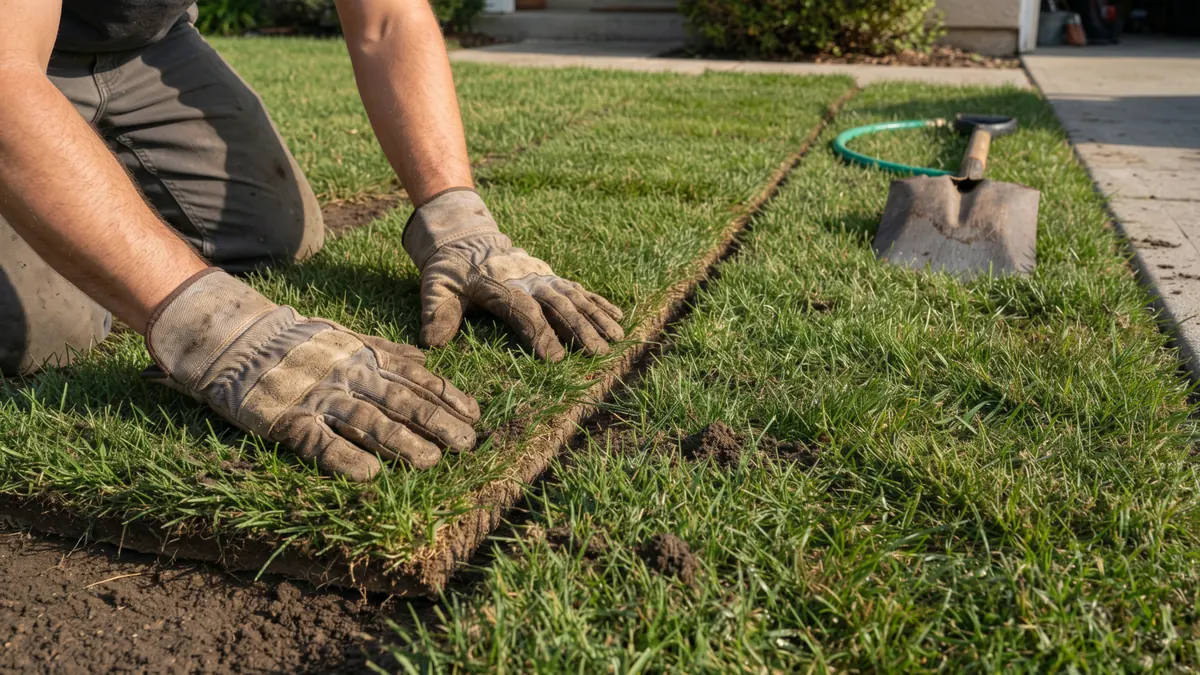
Table of contents
- What Restoration Can Include
- Why the Ground Can Settle
- Trench vs Trenchless Restoration
- Before the Work Starts
- After the Work
- Sod or Seed
- Concrete and Hardscape
- Irrigation and Plants
- Questions Homeowners Ask
- Will the new lawn match the old one?
- Who pays to replace plants that were removed?
- What if the concrete does not match?
- Next Step
Yard restoration after sewer line work is the final stage of the job, and it is the part homeowners see every day, so it deserves as much attention as the pipe itself. Restoration is not always included in a quote, and it can mean very different things, from a patch of grass to rebuilt concrete or pavers. This guide explains what is normally involved, why the ground can settle and how to confirm in writing what will be put back.
What Restoration Can Include
Depending on where the work took place, restoration may cover:
- Backfill and compaction. Filling the trench or pits in layers and packing the soil so it does not sink.
- Lawn. Re-laying sod or reseeding.
- Concrete and hardscape. Patching driveways, walkways or patios, and rebuilding pavers.
- Irrigation. Repairing sprinkler lines or drip lines that were cut.
- Landscaping. Replanting shrubs or flowers that were removed.
- Fences and gates. Taking down and rebuilding anything that was in the way.
Why the Ground Can Settle
Soil that has been dug up is looser than the soil around it. Even when it is packed in layers, it can settle over time, especially after the first rains or watering. A shallow dip a few weeks later is not unusual. A deep or growing hollow, however, can mean the trench was not compacted well, so ask your provider how the backfill is done and what happens if settling occurs.
Trench vs Trenchless Restoration
Open-trench work disturbs a long strip of the yard, so there is more to restore. Trenchless methods concentrate the work at the pits, so the area to restore is smaller. Whichever method is used, the restoration should be named in the written scope. Our guide to trenchless and traditional repair compares the two, and our overview of what affects the cost of sewer line replacement shows where restoration fits in a quote.
If it is not in the written estimate, do not assume it is included. Ask what will be put back and what will not.
If it is not in the written estimate, do not assume it is included.
Before the Work Starts
- Walk the site with the provider. Point out sprinklers, plants, fences and anything fragile.
- Take photographs of the lawn, concrete and landscaping beforehand.
- Ask what is included. Sod or seed, hardscape, irrigation and plants should each be named.
- Ask about watering and care. New sod and seed need attention to take root.
- Clarify who handles settling. Ask what happens if the trench sinks after the first rain.
After the Work
Water new sod as the provider advises, and keep heavy loads off the trench for a while. Watch the area for the first few weeks and photograph any dips or cracks. Report them promptly and in writing, because documentation makes follow-up easier.
Sod or Seed
Sod gives instant cover and can be laid over a prepared trench, but it needs regular watering while the roots take hold. Seed costs less effort to lay but takes longer to establish and can wash out in heavy rain. Ask which approach is in the scope and what care it needs. Local nurseries can advise on grass types that suit Southern California conditions.
Concrete and Hardscape
New concrete is poured into a cut or broken area and needs time to cure before it carries vehicles. Ask when it is safe to walk or drive on it and whether control joints will match the existing pattern. Pavers can be lifted and relaid, but the base underneath must be rebuilt first, so ask how the base is compacted.
Irrigation and Plants
Sprinkler and drip lines are often cut during excavation. Ask who tests the system afterward and fixes any leaks. Shrubs and plants may be removed and replanted or replaced, and the written scope should say which.
Questions Homeowners Ask
Will the new lawn match the old one?
Often not exactly at first. Sod and seed may differ in color and texture from the surrounding lawn until they blend in.
Who pays to replace plants that were removed?
It depends on the written scope. Confirm in advance whether replanting is included.
What if the concrete does not match?
New concrete often looks different from older concrete. Ask whether the provider can match the finish and see examples of past work.
Next Step
Planning a repair and want restoration clearly spelled out? Call now to speak to a specialist at (562) 603-5090, available 24/7, and ask what a written scope should include.
Have a Question About Your Sewer Line?
Call any time to be connected with a local service provider and ask about a camera inspection and its cost. Or send a message and ask about your situation.
Related Guides

Trenchless vs Traditional Sewer Repair: Which Is Right for Your Home?
Digging a trench or working through small pits? Compare cost, time, yard damage and when each method makes sense.
Read more →
How to Prepare for Pipe Bursting: A Homeowner's Checklist
A few simple steps before the crew arrives make pipe bursting faster and easier. Here is what to do the week before, the day of and after.
Read more →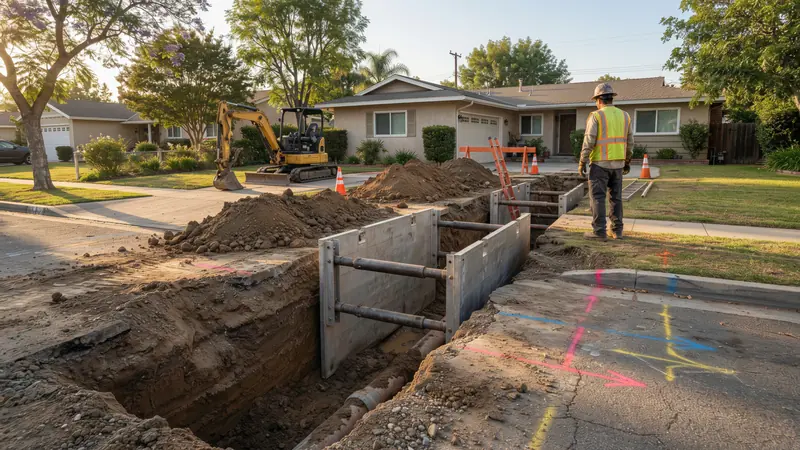
What Affects the Cost of Sewer Line Replacement
Sewer line replacement quotes vary for real reasons. Learn what shapes a quote, from pipe depth and access to permits, so estimates make sense.
Read more →