Pipe Bursting vs Pipe Lining: Which Fits Your Pipe
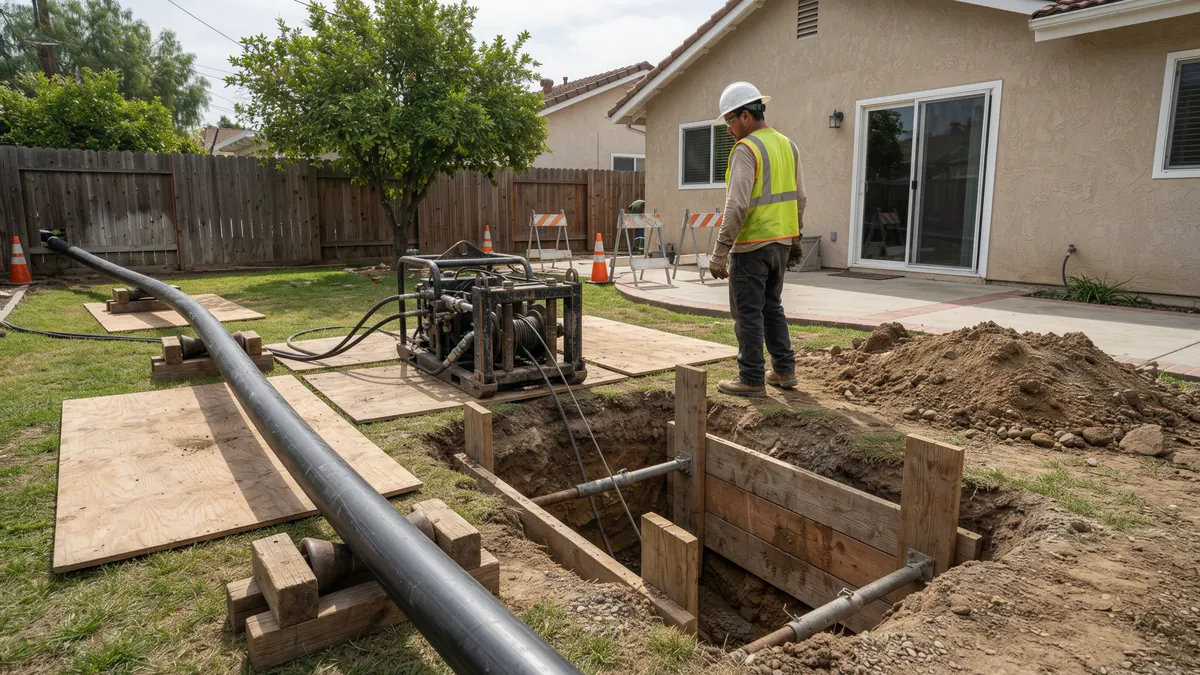
Table of contents
- Replace the Pipe or Renew It?
- How Pipe Bursting Works
- How Pipe Lining Works
- Side by Side
- Conditions That Favor Each
- Conditions that favor pipe bursting
- Conditions that favor pipe lining
- When Neither Is a Fit
- Questions to Ask Your Provider
- What the Day Looks Like for Each Method
- Questions Homeowners Ask
- Which method is less disruptive?
- Does lining reduce flow?
- Can I choose between them?
- Sources and Further Reading
- Next Step
Pipe bursting vs pipe lining is a common question for homeowners who want to avoid a full trench, because both are no-dig methods that work in very different ways. Bursting replaces the old pipe with a new one, while lining renews the old pipe from the inside. This guide compares how each works, where each one is limited and which conditions point toward one or the other.
Replace the Pipe or Renew It?
The difference is simple. With bursting, the old pipe is broken apart in place and a brand-new pipe takes its path. With lining, the old pipe stays and a new pipe-like layer is formed inside it. Which one fits depends on the pipe’s condition, size, shape and surroundings, not on which method sounds more modern. Our overview of trenchless and traditional repair puts both in context.
How Pipe Bursting Works
A crew digs an entry pit and an exit pit, one near the house or cleanout and one near the connection. A bursting head is pulled through the old pipe, breaking it outward into the surrounding soil, and a new pipe, often HDPE, is pulled in behind it. The Wisconsin DNR describes it as a method where a flexible liner pipe of equal or larger diameter is pulled behind the bursting device, and the EPA’s fact sheet and Portland’s Bureau of Environmental Services explain the process in more detail. Our pipe bursting page covers the service, and our checklist on how to prepare for pipe bursting helps with the day itself.
How Pipe Lining Works
Lining uses a resin-saturated tube that is inserted into the old pipe and cured in place, forming a jointless pipe inside the old one. ASTM F1216 describes the inversion method. No pits are needed along the run in the same way, since access is through existing openings such as a cleanout. See our pipe relining page and our guide to pipe lining problems.
Side by Side
| Factor | Pipe bursting | Pipe lining |
|---|---|---|
| What happens to the old pipe | Broken apart and left in the ground | Stays in place and is lined |
| Pipe condition needed | Can handle badly damaged pipe | Needs a pipe that holds its shape |
| Pipe size | New pipe can be the same size or larger | Inside diameter is slightly reduced |
| Digging | Entry and exit pits | Little digging, access through existing openings |
| Bellies and offsets | Can correct some by installing new pipe on a new path | Follows the old pipe, so sags and steps stay |
| Nearby utilities and soil | Must be checked before pulling | Less ground disturbance along the run |
Conditions That Favor Each
Conditions that favor pipe bursting
- Pipe that is cracked, broken or badly deteriorated but not blocked by something the bursting head cannot pass.
- A line that needs more capacity, since the new pipe can be larger.
- Pipe with many defects, where lining would not solve the issue.
Conditions that favor pipe lining
- Pipe with cracks, leaky joints or root entry that still holds its round shape.
- A line where pits are hard to place, such as under a driveway or patio.
- A pipe where the existing grade is acceptable and there are no sags.
If the pipe is too damaged to line, bursting or a trench is on the table. If the pipe is still round and at a good grade, lining may fit. Camera footage should show why.
Bursting replaces the pipe. Lining renews it. The footage shows which one your pipe allows.
When Neither Is a Fit
A collapsed section can stop a liner and some bursting heads. Unusual obstacles such as a repair with a rigid sleeve, a steel section or heavy concrete encasement can complicate bursting. In those cases a trench may be the practical option. Ground and utility conditions also matter, and a provider should check for nearby lines and structures before pulling a bursting head. Our guide to sewer line repair options shows the full range.
Questions to Ask Your Provider
- Why does my pipe fit this method? The answer should refer to the camera footage.
- What will the new pipe be made of, and what size?
- Where will the pits go, or how will access be handled?
- What utilities are near the line, and how will they be protected?
- How are branch connections handled? This matters for both methods.
- Who handles permits and inspection?
- What restoration is included?
What the Day Looks Like for Each Method
For bursting, expect pits to be dug, equipment set up and the new pipe pulled through. Ask the provider when water must stay off. For lining, expect cleaning, a camera run, liner installation, curing and a final video. Our checklist on how to prepare for pipe bursting covers the practical side for homeowners.
Questions Homeowners Ask
Which method is less disruptive?
Both avoid a full-length trench. Bursting needs two pits, while lining uses existing access. The right comparison is for your yard and your pipe.
Does lining reduce flow?
A liner thins the inside diameter slightly. A smooth surface and the lack of joints often compensate, but ask the provider about your line.
Can I choose between them?
If both are possible, you can discuss the trade-offs. If the pipe is collapsed or sagging, the pipe makes the decision.
Sources and Further Reading
- U.S. EPA: pipe bursting fact sheet
- Portland BES: pipe bursting
- Wisconsin DNR: collection system maintenance
- ASTM F1216: inversion and curing of a resin-impregnated tube
- NASSCO: pipe rehabilitation matrix
Next Step
Wondering which method fits your line? Call now to speak to a specialist at (562) 603-5090, available 24/7, and ask for a camera inspection so the choice rests on the footage.
Have a Question About Your Sewer Line?
Call any time to be connected with a local service provider and ask about a camera inspection and its cost. Or send a message and ask about your situation.
Related Guides

Trenchless vs Traditional Sewer Repair: Which Is Right for Your Home?
Digging a trench or working through small pits? Compare cost, time, yard damage and when each method makes sense.
Read more →
How to Prepare for Pipe Bursting: A Homeowner's Checklist
A few simple steps before the crew arrives make pipe bursting faster and easier. Here is what to do the week before, the day of and after.
Read more →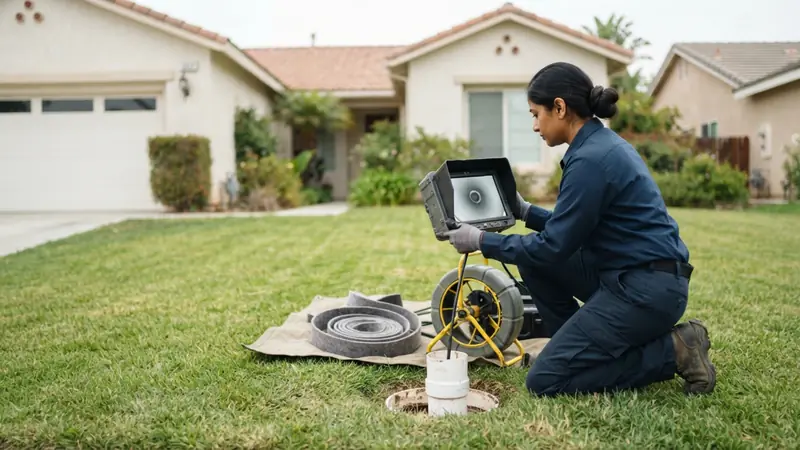
Common Pipe Lining Problems and How to Avoid Them
Most liners work for decades, but a rushed job can leave wrinkles, blocked connections or a soft cure. Here is what goes wrong and how to prevent it.
Read more →