ABS vs PVC Sewer Pipe: Differences, Codes and Lifespan
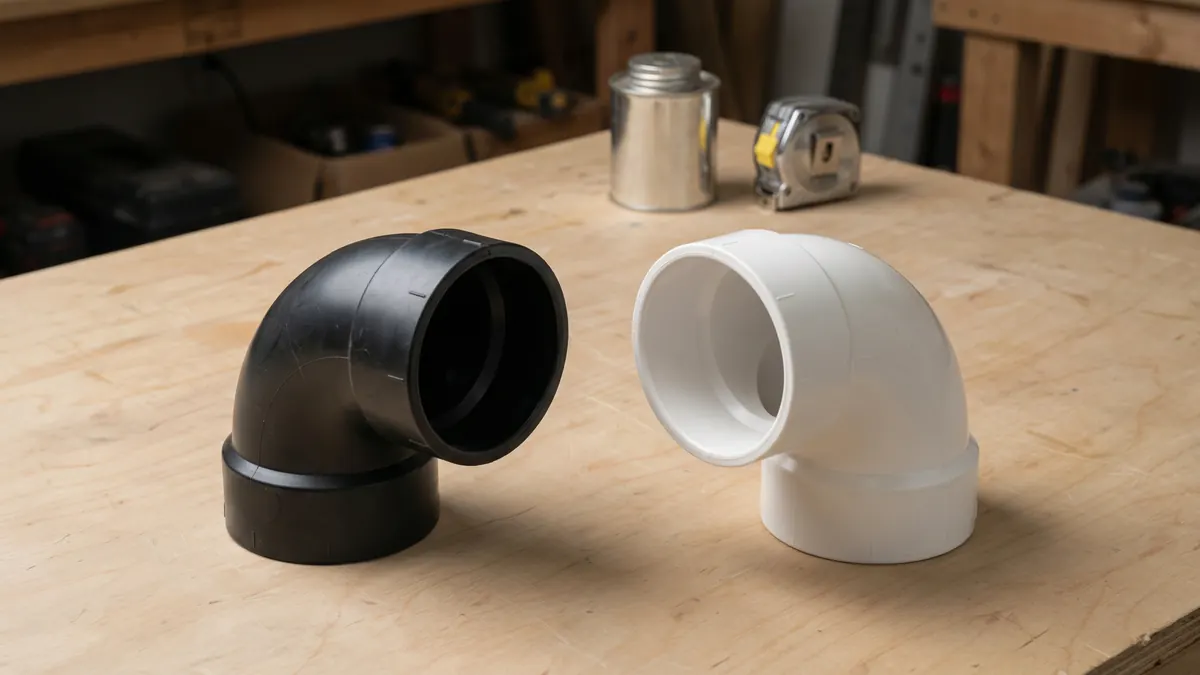
Table of contents
- What ABS and PVC Are
- Side by Side
- Joining and Mixing
- What the Code and Your City Say
- Lifespan
- Questions to Ask Your Provider
- Identifying the Pipe You Have
- Installation Quality Matters More Than Color
- Questions Homeowners Ask
- Is black or white pipe stronger?
- Can I switch from one to the other during a repair?
- Does the new pipe replace the old one entirely?
- Next Step
ABS vs PVC sewer pipe is a common question when a line is being replaced, because both are plastic pipes widely used for drains and building sewers. They look different, they are joined differently and local rules can favor one over the other. This guide compares the two in plain terms and lists what to confirm with your city and your provider before the new pipe is chosen.
What ABS and PVC Are
ABS is acrylonitrile butadiene styrene, usually black. PVC is polyvinyl chloride, usually white or sometimes gray for sewer pipe. Both are rigid plastics that resist corrosion, do not rust and come in long sections with solvent-cemented joints. Both are installed in new homes and in replacements of older clay, cast iron and fiber lines. Our guide to sewer pipe materials places them alongside older options.
Side by Side
| Factor | ABS | PVC |
|---|---|---|
| Typical color | Black | White (sometimes other colors) |
| Material | Acrylonitrile butadiene styrene | Polyvinyl chloride |
| Joining | Solvent cement made for ABS | Solvent cement made for PVC |
| Corrosion | Does not rust | Does not rust |
| Typical use | Drain, waste, vent and building sewers | Drain, waste, vent and building sewers |
| Local preference | Allowed or restricted depending on city | Allowed or restricted depending on city |
Joining and Mixing
Each material uses its own cement, and joining the two requires a transition method approved by the code and by the product maker. A mixed system is not automatically a problem, but the connection must be made correctly. Ask the provider how connections to existing pipe will be made.
What the Code and Your City Say
Plumbing code sets the rules for approved materials, and cities may add their own requirements. Some jurisdictions prefer one material or have rules for specific uses. Do not assume. Ask your city or the provider which material is accepted for your repair and what standard it must meet. Our guide to sewer repair permits explains who to ask.
Both ABS and PVC are common and both can serve for decades when installed correctly. The better question is which one your city accepts and how the connections are made.
The better question is which material your city accepts and how it is connected.
Lifespan
Neither material rusts, and a continuous glued line has fewer joints for roots to enter than an older jointed pipe. Real-world lifespan still depends on installation quality, bedding, slope and ground conditions. Our guide on how long a sewer line lasts covers what affects it.
Questions to Ask Your Provider
- Which material will you use, and why?
- Is it accepted by the city for this work?
- How will you connect to the existing pipe?
- What is the bedding and slope? See sewer line size and slope.
- What warranty applies to the installation?
Identifying the Pipe You Have
Black plastic pipe is typically ABS and white or light gray plastic pipe is typically PVC, but older homes may have clay, cast iron or fiber pipe instead. Printed markings on the pipe often show the material and size, and a camera inspection can show what is inside the line. If you are unsure, ask the provider to confirm the material on the footage. See sewer pipe materials.
Installation Quality Matters More Than Color
A properly installed line in either material depends on:
- Clean, correctly made joints with the right cement and cure time.
- A stable bed of suitable material under and around the pipe.
- The right slope. See sewer line size and slope.
- Testing and inspection before the trench is closed.
- Careful backfill so no sharp stones or heavy loads press on the pipe.
Questions Homeowners Ask
Is black or white pipe stronger?
Both are rigid plastics rated for sewer use, and correct installation matters more than color. Ask for the product standard.
Can I switch from one to the other during a repair?
Often yes with the right transition, but confirm it with the provider and the city.
Does the new pipe replace the old one entirely?
It depends on the method. See sewer line repair options.
Next Step
If you are planning a replacement and want to understand the material choice, call now to speak to a specialist at (562) 603-5090, available 24/7.
Have a Question About Your Sewer Line?
Call any time to be connected with a local service provider and ask about a camera inspection and its cost. Or send a message and ask about your situation.
Related Guides
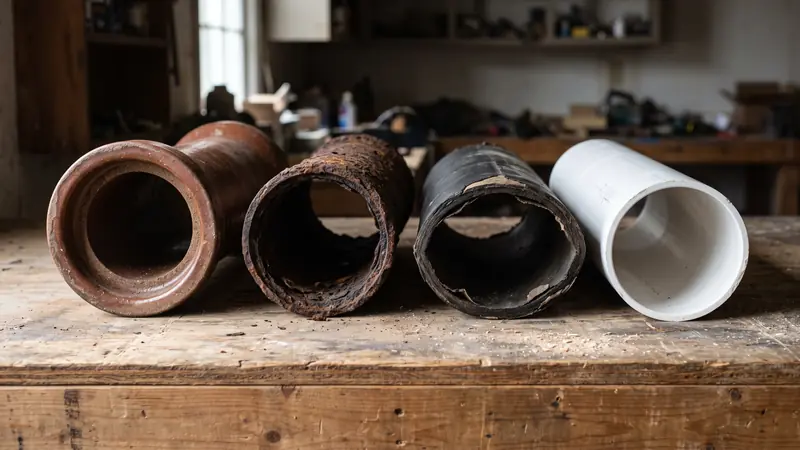
Clay vs Cast Iron vs PVC Sewer Pipe: How Long Each One Lasts
Your sewer pipe material says a lot about how long it has left. Compare clay, cast iron, Orangeburg, ABS, PVC and HDPE in one place.
Read more →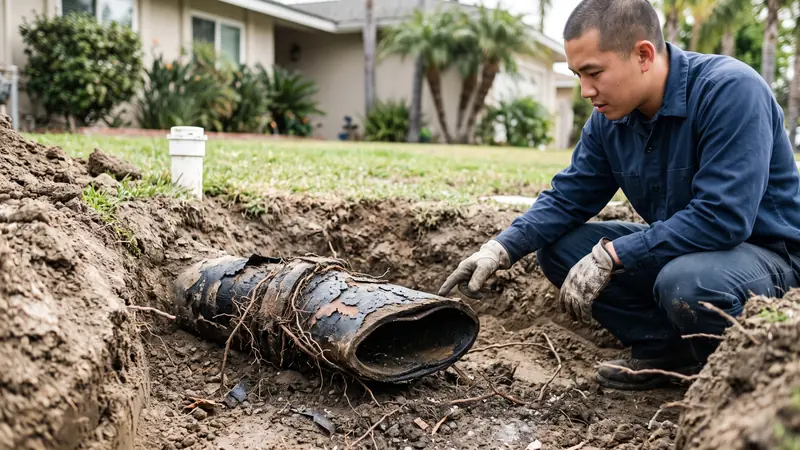
Orangeburg Pipe: How to Tell If Your Home Has It
Orangeburg pipe was used in many post-war homes, and it is now flattening and failing. Here is how to spot it and what to do next.
Read more →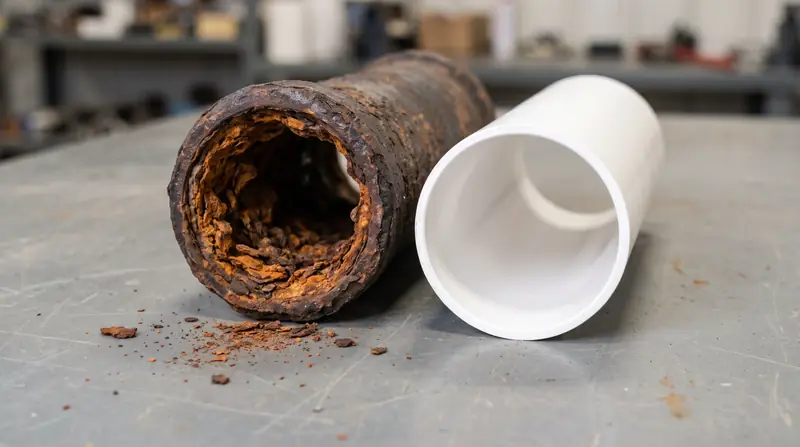
Cast Iron Sewer Pipe Problems in Older Homes
Cast iron sewer pipes can corrode, crack and clog with age. Learn the warning signs, why older homes are affected and what repair options exist.
Read more →