How Long Does Sewer Line Replacement Take?
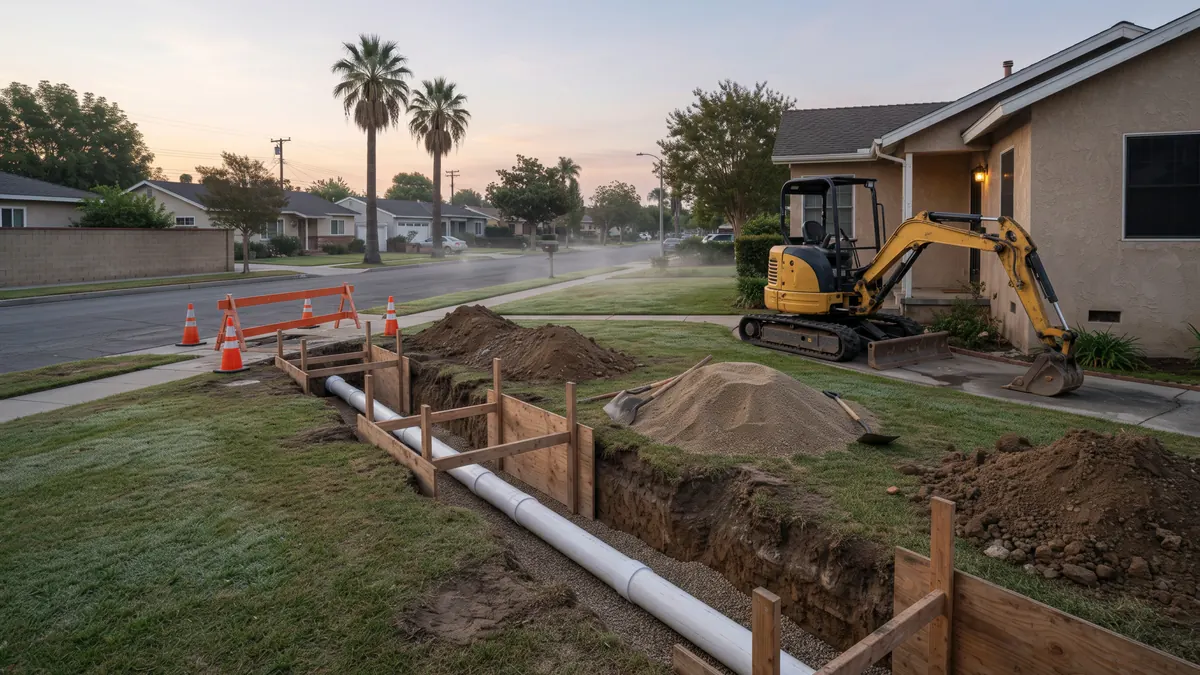
Table of contents
- The Phases of a Replacement
- What Shapes the Schedule
- Length and depth
- Method
- Surface and obstacles
- Permits and inspections
- Weather and unexpected findings
- What Happens to Your Water During the Work
- Restoration Often Comes After the Pipe Work
- Questions to Ask About the Schedule
- What You Can Do to Keep the Job on Track
- Questions Homeowners Ask
- Is trenchless always quicker?
- Can I stay in my home during the work?
- What if the work takes longer than planned?
- Next Step
How long sewer line replacement takes depends on the line, the method and the paperwork, so the honest answer is a range that your provider can narrow down once the pipe has been inspected. This guide walks through each phase of a typical job and explains what stretches or shortens the schedule, so you can plan your household around it and ask for a realistic timeline in writing.
The Phases of a Replacement
A replacement usually moves through these phases, though the order and overlap vary:
- Inspection and scope. A camera inspection shows the problem and what needs replacing.
- Permit and scheduling. The permit is applied for and the work is scheduled. See sewer repair permits.
- Locating and marking. Public utilities are marked, and private lines are located.
- Excavation or pit work. A trench is dug for open-trench work, or entry and exit pits for pipe bursting.
- Pipe installation. The new pipe is laid or pulled in and connected.
- Testing and inspection. The work is checked, often with a camera, and inspected by the city if required.
- Backfill and restoration. The ground is filled, compacted and the surface is rebuilt.
What Shapes the Schedule
Length and depth
A longer, deeper line takes more time to excavate or access.
Method
Open-trench work covers the whole length, while trenchless methods concentrate work at the pits. Our guide to trenchless and traditional repair compares the two.
Surface and obstacles
A line under a lawn is quicker to reach than one under a driveway, patio or mature tree. A line under a slab is a different job again, as explained in our guide to repairing a sewer line under a slab.
Permits and inspections
The time to get a permit and the availability of an inspector can affect the start and the finish. Ask your provider how this is handled.
Weather and unexpected findings
Rain can delay excavation. Hidden damage, an unmarked line or a different pipe material than the footage showed can change the plan.
Ask for a written timeline that separates the paperwork, the work on site and the restoration. They often run on different clocks.
The paperwork, the work on site and the restoration often run on different clocks.
What Happens to Your Water During the Work
There will be a period when the sewer cannot be used, and ask your provider exactly when and for how long. Plan for laundry, showers and cooking around it. Ask whether a temporary arrangement is possible and where the home’s cleanout is, since our guide on where the sewer cleanout is can help you find it.
Restoration Often Comes After the Pipe Work
The pipe may be installed and working before the lawn, concrete or pavers are fully restored. Our guide to yard restoration after sewer work explains why settling time and scheduling matter.
Questions to Ask About the Schedule
- When can the work start, and what does it depend on?
- How many days will crews be on site, and will they be there each day?
- When will water be off, and for how long?
- When is the inspection expected?
- When will restoration happen relative to the pipe work?
- How will you tell me if the schedule changes?
What You Can Do to Keep the Job on Track
- Clear access to the work area, including gates, vehicles and anything stored along the line.
- Move belongings away from areas where concrete or walls will be cut.
- Secure pets and keep children away from equipment.
- Tell neighbors if the work may block a shared driveway or street.
- Answer questions promptly, since decisions on site can slow work when they wait.
Questions Homeowners Ask
Is trenchless always quicker?
Not always. It can reduce digging, but it also needs pits, equipment setup and suitable pipe conditions. Ask for the schedule for your property.
Can I stay in my home during the work?
Often yes, but without normal water use for part of the time. Ask the provider about the plan and about any impact on neighbors.
What if the work takes longer than planned?
Ask in advance how delays are communicated and how changes in scope are handled in writing.
Next Step
To get a timeline for your own line, start with a camera inspection. Call now to speak to a specialist at (562) 603-5090, available 24/7, and ask what a realistic schedule looks like for your home.
Have a Question About Your Sewer Line?
Call any time to be connected with a local service provider and ask about a camera inspection and its cost. Or send a message and ask about your situation.
Related Guides

Trenchless vs Traditional Sewer Repair: Which Is Right for Your Home?
Digging a trench or working through small pits? Compare cost, time, yard damage and when each method makes sense.
Read more →
How to Prepare for Pipe Bursting: A Homeowner's Checklist
A few simple steps before the crew arrives make pipe bursting faster and easier. Here is what to do the week before, the day of and after.
Read more →
What Affects the Cost of Sewer Line Replacement
Sewer line replacement quotes vary for real reasons. Learn what shapes a quote, from pipe depth and access to permits, so estimates make sense.
Read more →