Offset Sewer Pipe Joints: Causes, Detection and Repair
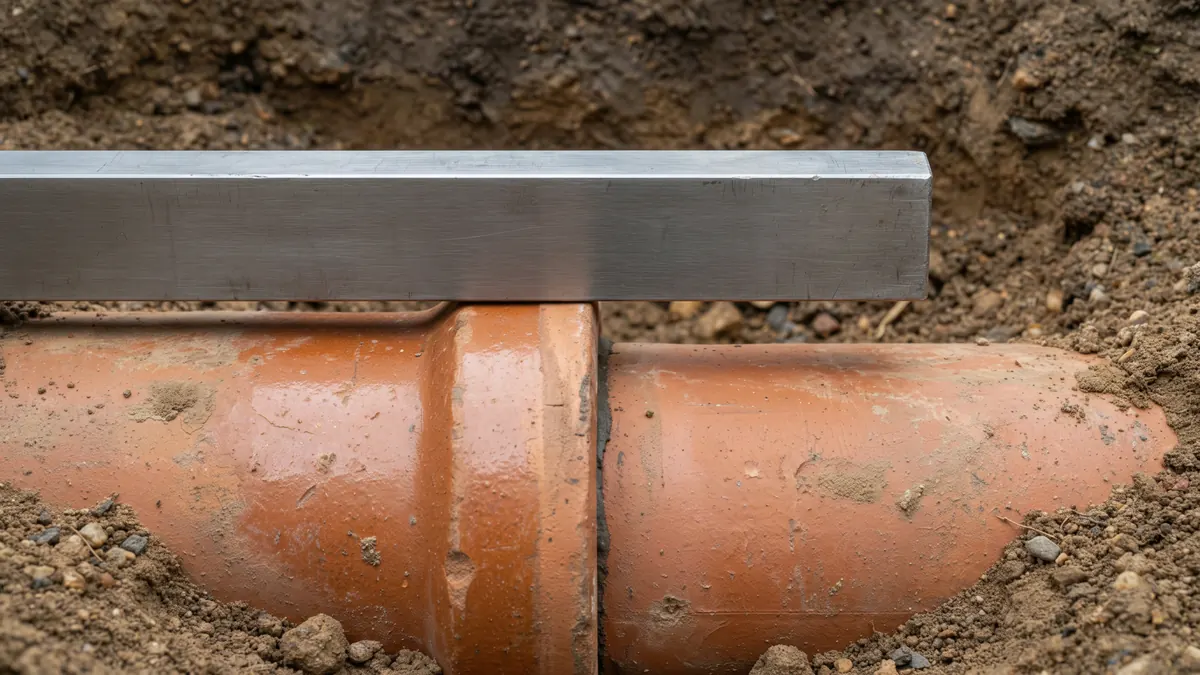
Table of contents
- What an Offset Joint Is
- What Causes It
- How an Offset Shows Up
- Repair Options
- When an Offset Becomes a Belly
- How Much Offset Is Too Much?
- Monitoring a Minor Offset
- Questions Homeowners Ask
- Can an offset fix itself?
- Is every offset a reason to replace the pipe?
- Will roots come back after cleaning?
- Sources and Further Reading
- Next Step
An offset sewer pipe joint happens when two pipe sections no longer line up, leaving a step or a gap at the seam. It is a common finding in older jointed pipe such as clay, and it often explains why a line clogs again and again. This guide explains what causes an offset, how a camera inspection shows it and which repairs make sense, depending on how large the step is.
What an Offset Joint Is
Sewer pipe is installed in sections. If one section sits higher or lower than the next, or shifts sideways, the inside surface is no longer smooth. The step can catch paper, grease and other debris, and the gap can let soil and roots in. Pipe condition standards used in the industry classify this as a joint defect, and NASSCO’s Pipeline Assessment Certification Program gives inspectors a common language for recording it.
What Causes It
- Settling soil. Ground under the pipe moves, and a section drops.
- Poor bedding or compaction when the pipe was installed.
- Ground movement from drainage changes, earthquakes or nearby excavation.
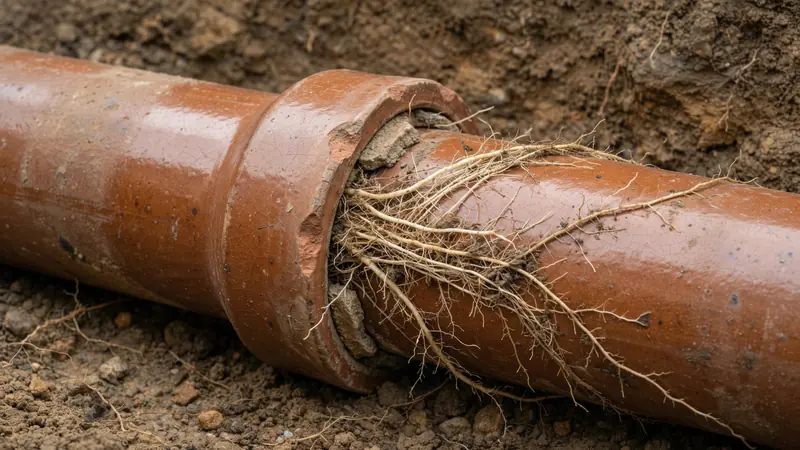
- Tree roots that push sections apart.
- Heavy loads above the pipe.
Older rigid pipe such as clay is more prone to this because it does not flex. Our guide to clay sewer pipe problems explains why.
How an Offset Shows Up
Repeat clogs in the same line, slow drains and roots at a joint are typical signs. A sewer camera inspection shows the step directly and records how far down the line it sits, so a repair can be planned. Our guide to reading a camera report explains the terms and distances.
A small offset may only need cleaning and monitoring. A large offset, or several, usually needs a repair because debris and roots keep collecting at the step.
A step in the pipe collects debris and invites roots.
Repair Options
- Cleaning and monitoring. For a minor step, cleaning and a follow-up camera check may be enough.
- Spot repair. For a single bad joint, replacing that section can fix the step. See spot repair vs full replacement.
- Lining. A liner can seal gaps and smooth small offsets but a severe step can block or catch the liner. See pipe lining problems.
- Replacement. For multiple offsets or a severely shifted pipe, replacing the line corrects the alignment. See sewer line repair options.
When an Offset Becomes a Belly
If the ground continues to settle, a series of offsets can turn into a sag that holds waste. Read our guide to bellied sewer lines.
How Much Offset Is Too Much?
There is no single number that applies to every pipe. A provider judges the offset by what it does: whether it catches debris, restricts flow, lets roots or soil in, or would block a repair method such as a liner. A step that has not changed and is not causing clogs may only need monitoring. One that is growing, or is causing repeat clogs, deserves a repair plan.
Monitoring a Minor Offset
- Keep the camera footage as a baseline.
- Repeat the inspection after a period, or after heavy rain or digging nearby.
- Track clogs in a log. See why a sewer line keeps clogging.
- Compare the new footage with the old to see whether the step has grown.
Questions Homeowners Ask
Can an offset fix itself?
No. Once the pipe has shifted, it stays shifted unless it is repaired, and soil movement can make it worse.
Is every offset a reason to replace the pipe?
No. The size of the step, the number of offsets and the condition of the pipe all matter. The footage should show why a method is recommended.
Will roots come back after cleaning?
If the gap remains, they can. Sealing or repairing the joint is the lasting fix. See tree roots in sewer lines.
Sources and Further Reading
Next Step
If a camera report mentions an offset and you want to understand the options, call now to speak to a specialist at (562) 603-5090, available 24/7.
Have a Question About Your Sewer Line?
Call any time to be connected with a local service provider and ask about a camera inspection and its cost. Or send a message and ask about your situation.
Related Guides
Clay Sewer Pipe Problems: Why Vitrified Clay Fails at the Joints
Vitrified clay pipe is durable, yet the joints and ground movement often cause trouble. Learn the common problems and the repair options.
Read more →
What Is a Bellied Sewer Line? Signs, Causes and Repair Options
A bellied sewer line has a sag that holds water and waste. Learn the warning signs, why bellies form and the repair options to ask a service provider about.
Read more →
How to Read a Sewer Camera Inspection Report
Distance counters, clock positions and terms like offset or belly can be confusing. Here is how to read your sewer camera footage and report.
Read more →