Clay Sewer Pipe Problems: Why Vitrified Clay Fails at the Joints
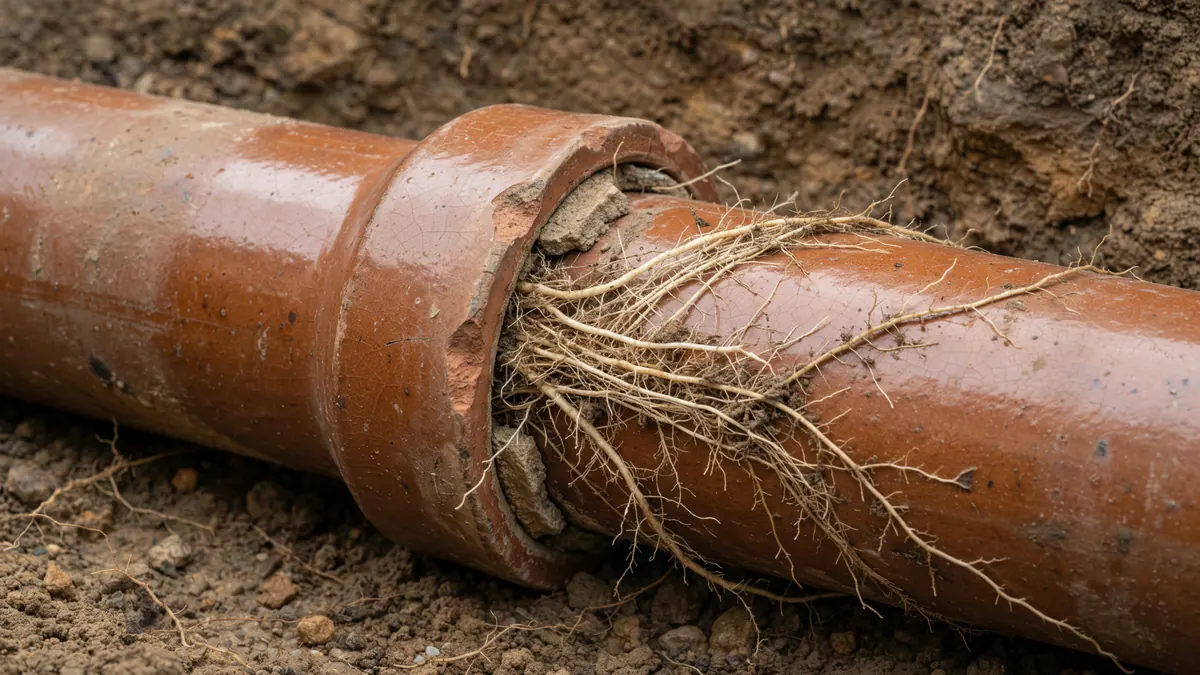
Table of contents
- What Vitrified Clay Pipe Is
- Why Joints Are the Weak Point
- Root intrusion
- Cracks and breaks
- Offsets
- How Problems Show Up
- Repair Options for Clay Pipe
- Signs Your Home May Have Clay Pipe
- Maintenance for a Clay Line
- Questions Homeowners Ask
- Does clay pipe need to be replaced?
- Can roots be stopped without replacing clay pipe?
- How long does clay pipe last?
- Sources and Further Reading
- Next Step
Clay sewer pipe problems are among the most common issues in older Southern California neighborhoods, even though the material itself is hard and long-lasting. Vitrified clay pipe was widely used for decades, and many homes still have it. The pipe wall often outlasts the joints that hold it together. This guide explains what clay pipe is, why the joints are the weak point and what the repair options look like.
What Vitrified Clay Pipe Is
Vitrified clay pipe is made from clay that is fired at high temperature, which gives it a hard, glassy surface that resists many chemicals. It comes in short sections, each with a socket at one end called a bell and a plain end called a spigot. The sections are pushed together and sealed at the joint. Our guide to sewer pipe materials compares clay with other materials.
Why Joints Are the Weak Point
The pipe wall can remain sound for a very long time, but each section meets the next at a joint, and joints are where problems usually start. Old joint materials can deteriorate, and ground movement can pull sections apart or shift them out of line. Once there is a gap, groundwater can enter and roots can find their way in.
Root intrusion
Roots are drawn to the moisture and nutrients in the pipe and can enter through even a small gap, then thicken inside. Read our guide to tree roots in sewer lines.
Cracks and breaks
Clay is rigid, so it does not flex with ground movement the way some plastics do. Heavy loads above the pipe, settling soil and past excavation can crack it. See our guide to cracked sewer pipe.
Offsets
When sections shift so they no longer line up, a step forms at the joint that can catch debris. See offset sewer pipe joints.
The clay itself often survives for decades. The joints, and what the ground does around them, are what usually fail.
The clay often outlasts the joints that hold it together.
How Problems Show Up
Repeated clogs, slow drains, gurgling and odors can all be signs of a clay line with joint trouble. A sewer camera inspection shows roots at joints, gaps, cracks and offsets directly. Our guide to reading the camera report explains the terms. Homes built in the 1960s often have clay laterals, as covered in sewer line problems in 1960s homes.
Repair Options for Clay Pipe
- Cleaning. Clears roots and buildup but does not seal the joint. See hydro jetting.
- Spot repair. Fixes a single bad joint or cracked section. See spot repair vs full replacement.
- Lining. Seals joints and cracks from the inside if the pipe is still round and well aligned. See pipe lining.
- Replacement. When many joints are failing or the pipe has collapsed. See sewer line repair options.
The NASSCO pipe rehabilitation matrix compares the technologies and their limits for different conditions.
Signs Your Home May Have Clay Pipe
- The age of the home. Many homes built before the 1970s had clay laterals.
- A camera shows terracotta-colored pipe with a visible bell at each joint.
- The neighborhood was developed when clay was standard.
- Past root problems at joints in the same line.
A camera inspection confirms the material. See sewer pipe materials.
Maintenance for a Clay Line
Periodic camera checks show whether joints are holding. Where roots are a known issue, schedule cleaning and plan to repair the entry points. Choose cleaning methods with care for older pipe, as discussed in our guide on hydro jetting and old pipes. If the footage shows a growing number of joint problems, it is reasonable to ask about lining or replacement before a failure.
Questions Homeowners Ask
Does clay pipe need to be replaced?
Not necessarily. If the footage shows sound pipe with a few joint issues, repair or lining may be enough. A pattern of failures points toward replacement.
Can roots be stopped without replacing clay pipe?
Sealing the joints with a liner or repairing the gaps can stop roots from entering, while cutting alone does not.
How long does clay pipe last?
It depends on the conditions. Our guide on how long a sewer line lasts explains the factors.
Sources and Further Reading
Next Step
If your home has a clay line and repeat problems, call now to speak to a specialist at (562) 603-5090, available 24/7, and ask about a camera inspection.
Have a Question About Your Sewer Line?
Call any time to be connected with a local service provider and ask about a camera inspection and its cost. Or send a message and ask about your situation.
Related Guides
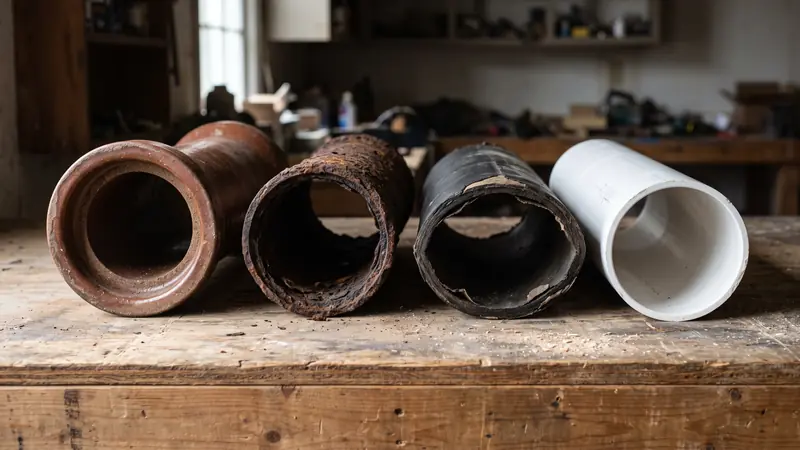
Clay vs Cast Iron vs PVC Sewer Pipe: How Long Each One Lasts
Your sewer pipe material says a lot about how long it has left. Compare clay, cast iron, Orangeburg, ABS, PVC and HDPE in one place.
Read more →
Sewer Line Problems in 1960s Homes in California
Homes built in the 1960s often have clay, cast iron or fiber sewer pipes now past 60 years old. Learn the common problems and how to check your line.
Read more →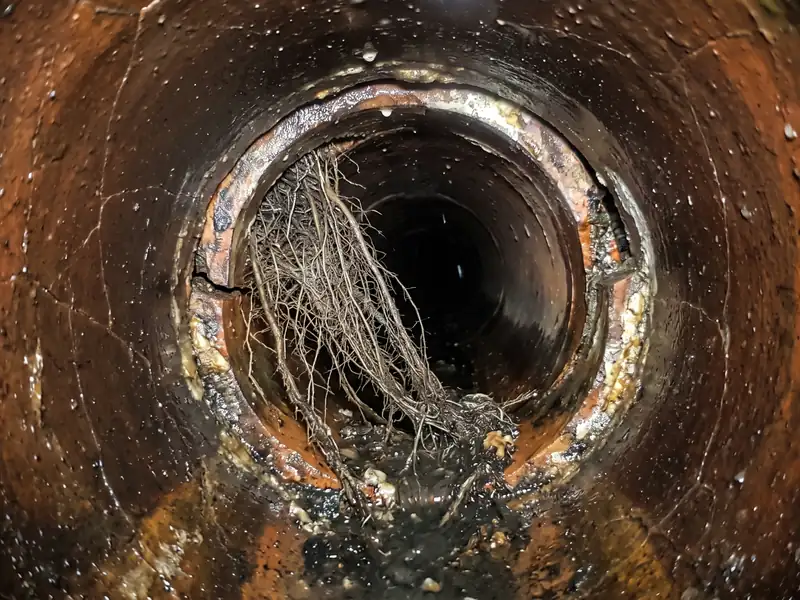
Tree Roots in Sewer Lines: Warning Signs, Causes and Fixes
Tree roots are a common cause of repeat sewer clogs. Learn the warning signs, how roots get in and the repair options to ask a service provider about.
Read more →