Soil, Groundwater and Sewer Lines in Southern California
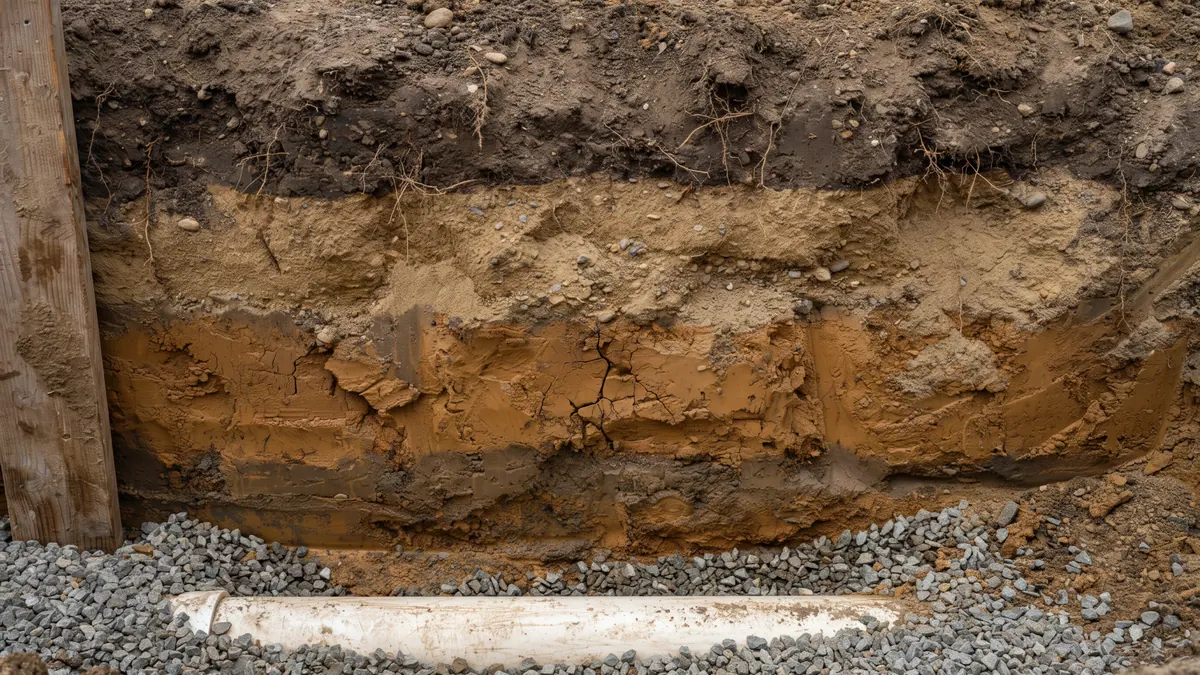
Table of contents
- The Pipe Depends on Its Bedding
- Soil Types and Moisture
- Clay soils
- Sandy and loose soils
- Fill and disturbed soils
- Groundwater and Rain
- How This Shows Up
- What It Means for Repairs
- Questions to Ask Before a Replacement
- Landscaping Choices That Help
- Questions Homeowners Ask
- Does my neighborhood have clay soil?
- Can irrigation affect my sewer line?
- Will a new pipe avoid soil problems?
- Next Step
Soil, groundwater and sewer lines are connected, because a buried pipe depends on the ground for support and is exposed to whatever the ground does. In Southern California, soils range from sandy to heavy clay, and moisture levels change with rainfall, irrigation and drainage. This guide explains in general terms how the ground can stress a sewer line and why the soil conditions are worth asking about when a pipe is repaired or replaced. It is general information; local conditions vary and an engineer or your city can speak to your site.
The Pipe Depends on Its Bedding
A buried pipe sits in a bed of soil or gravel that supports it along its length. If that support is uneven, washes out or moves, the pipe can sag, crack or pull apart at joints. Good installation uses suitable bedding and compaction, which is part of why a new pipe should be installed with attention to the base, not only the pipe itself. See residential sewer line size and slope for the slope that the support must maintain.
Soil Types and Moisture
Clay soils
Clay can swell when wet and shrink when dry. That movement can shift pipes over time and can stress rigid materials. Heavy clay also holds water, which can keep the area around a pipe damp.
Sandy and loose soils
Sandy soils drain quickly but may not support a pipe as firmly if water carries soil away. Voids can form around a damaged pipe.
Fill and disturbed soils
Soil that was dug and replaced, such as around a past repair, can settle more than undisturbed ground, which can affect a pipe laid in or across it.
Groundwater and Rain
Where the water table is high or the ground becomes saturated, groundwater can enter cracks and loose joints in a pipe, adding flow to the sewer. Heavy rain can have a similar effect. See heavy rain and sewer backups. Water moving along a damaged pipe can also carry soil into it, which can leave voids and lead to sinking ground.
The pipe and the soil work together. A pipe in unstable or very wet ground is more likely to settle, shift or take in water.
The pipe and the soil around it work together.
How This Shows Up
- Sags and bellies where the support settled. See bellied sewer lines.
- Offsets and separated joints where sections moved. See offset sewer pipe joints.
- Cracks from uneven loading. See cracked sewer pipe.
- Soggy or sinking ground over the line. See signs of a broken sewer line in your yard.
Older neighborhoods with clay pipe and older materials often show these patterns, as covered in sewer line problems in 1960s homes and clay sewer pipe problems.
What It Means for Repairs
When a line is replaced, ask how the trench will be bedded and backfilled and how the soil will be compacted. Where the ground is unstable or very wet, a provider may adjust the bedding or the method. A camera inspection shows the pipe’s state but not the soil, so ask the provider what they observe when the pipe is exposed.
Questions to Ask Before a Replacement
- How will the trench be bedded and what material supports the pipe?
- How will the backfill be compacted to limit settling?
- What happens if the ground is soft or wet where the pipe will go?
- Will the slope be checked after installation?
- Is there anything about the soil that affects the choice of method?
Landscaping Choices That Help
Direct downspouts and runoff away from the sewer route, avoid constant watering directly over the line and choose plants with modest root systems near it. See trees to avoid planting near a sewer line. Good drainage around the home reduces the water that reaches the ground around the pipe.
Questions Homeowners Ask
Does my neighborhood have clay soil?
It varies from one area to the next. Your city, a local geotechnical engineer or a provider familiar with the area can tell you more.
Can irrigation affect my sewer line?
Constant moisture near a pipe can affect the ground and encourage roots. Avoid heavy watering directly over the line. See trees to avoid planting near a sewer line.
Will a new pipe avoid soil problems?
A well-installed pipe with good bedding handles movement better, but poor ground can still cause settlement, so installation quality matters.
Next Step
If you suspect the ground is affecting your sewer line, call now to speak to a specialist at (562) 603-5090, available 24/7, and ask about a camera inspection.
Have a Question About Your Sewer Line?
Call any time to be connected with a local service provider and ask about a camera inspection and its cost. Or send a message and ask about your situation.
Related Guides

What Is a Bellied Sewer Line? Signs, Causes and Repair Options
A bellied sewer line has a sag that holds water and waste. Learn the warning signs, why bellies form and the repair options to ask a service provider about.
Read more →
Heavy Rain and Sewer Backups in Southern California
Heavy rain can overload sewer systems and expose cracked pipes, causing backups. Learn why storms trigger problems and how to protect your home.
Read more →
Sewer Line Problems in 1960s Homes in California
Homes built in the 1960s often have clay, cast iron or fiber sewer pipes now past 60 years old. Learn the common problems and how to check your line.
Read more →